What the Ancients Knew About Aging: Timeless Lessons for Seniors on Health and Longevity
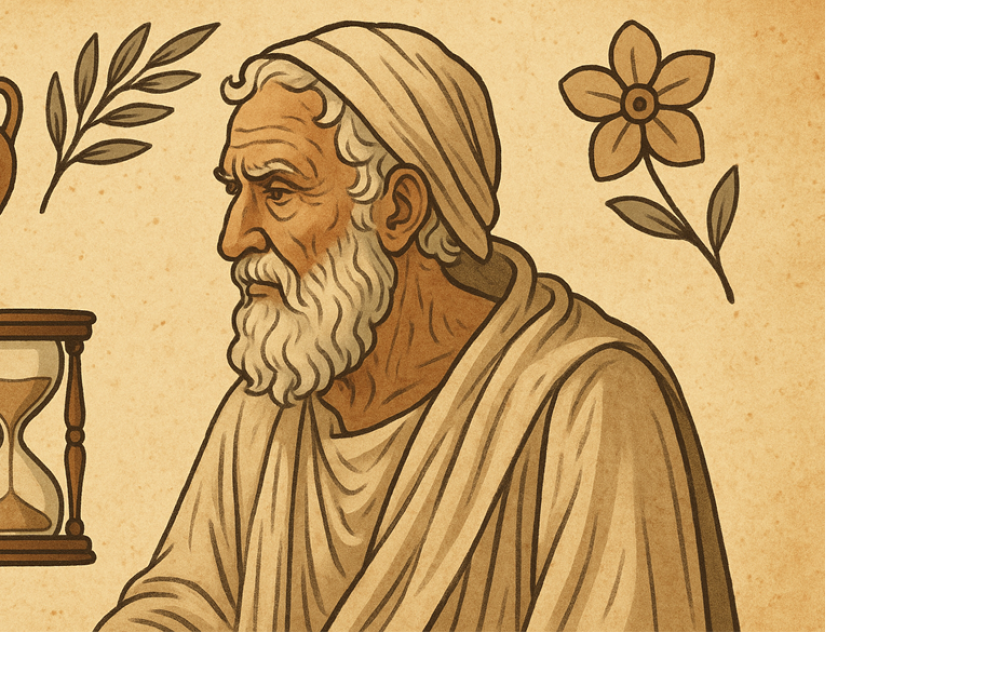
Here’s a compact tour of what the ancients thought it took to age well—practical wisdom gathered from Egypt and Mesopotamia to Greece, Rome, India, China, and the medieval Islamic world—plus how modern research echoes (or challenges) those ideas. Whether aging in place or opting for independent or assisted living, learn about the time-tested wisdom from our ancestors to help you age better.
What the ancients believed about long life
1) Accept mortality—and live with purpose
One of the oldest works we have, The Epic of Gilgamesh, is ultimately a meditation on accepting finitude. Gilgamesh’s quest for immortality ends not with a magic elixir but with the insight that meaning, legacy, and good governance outlast any one life. That philosophical shift—from chasing immortality to living well—frames much later traditions on “successful aging.” CliffsNotes+1
In Rome, Cicero’s De Senectute (“On Old Age”) argues that later life can be a golden season if one cultivates friendship, virtue, and intellectual labor, not mere bodily vigor. Old age, he contends, is lightened by character and community; the antidote to decline is an active mind and a useful role. Penelope+2Online Library of Liberty+2
2) Balance, moderation, and right “regimen”
Aristotle’s short treatise On Longevity and Shortness of Life treats aging as a natural, physical process shaped by constitutional balance (not unlike later medical systems). Longevity depends on maintaining the body’s internal “heat” and proper proportion—an early, speculative physiology—but the practical takeaway was moderation, temperate habits, and living in tune with one’s nature. Internet Classics Archive+2Wikipedia+2
Greco-Roman medicine later codified “dietetics” (daily regimen: food, movement, sleep, baths, sex, and emotions) as the cornerstone of health, a view that spread widely through late antiquity and the Islamic Golden Age.
3) Nourish life (yangsheng) rather than fight death
Classical Chinese medicine framed healthy aging as yangsheng—“nourishing life.” The Huangdi Neijing (Yellow Emperor’s Inner Classic) links longevity to living in harmony with seasonal rhythms, cultivating the breath, gentle movement, and conserving vital essence. It advocates regular routines, measured diet, and emotional balance—habits designed to slow depletion across the decades. rgm.hu+1
4) Rejuvenate from the inside out
Ayurveda in India developed rasāyana—rejuvenation therapies aimed at extending healthspan, sharpening cognition, and enhancing immunity. The Charaka Saṃhitā details lifestyle, botanicals, and tonics to preserve vigor in later life; the emphasis falls on digestion (agni), rest, orderly routine, and plant-based compounds that support resilience. Charak Samhita+2wjpmr.com+2
5) Keep a practical pharmacopeia—but don’t expect miracles
Ancient Egyptians compiled immense medical recipe books. The Ebers Papyrus includes remedies for pain, inflammation, and chronic ailments—useful for symptom relief—but it also shows a sobering truth: even in the most sophisticated Bronze-Age medicine, there was no real “cure” for aging, only care. HathiTrust Digital Library+2Internet Archive+2
Medieval Islamic physicians—synthesizing Greek, Persian, and Indian sources—offered careful regimens for old age in Ibn Sīnā’s (Avicenna’s) Canon of Medicine: gentle exercise, light easily digested foods, baths and massage, regular sleep, and cultivating joy. The goal was to protect dwindling strength and prevent disease, not chase immortality. rjwhelan.co.nz+1
Practical wisdom themes that surface across civilizations
Rhythm and routine. Rising and sleeping at consistent times, eating at regular hours, and adjusting activity to seasons appear in both the Neijing and Greco-Roman dietetics, echoed by Avicenna’s daily schedule. Modern chronobiology would agree that stable routines support metabolic and cognitive health. rgm.hu+1
Light, digestible diet with plants at the center. The ancients lacked our nutrition science, yet many advised simple foods, plenty of vegetables and herbs, and avoiding heaviness in older age (Cicero praises temperance; Avicenna specifies lighter fare; Ayurveda stresses digestibility). Contemporary data linking plant-forward patterns to cardiometabolic health gives this pre-scientific counsel a modern footing. Project Gutenberg+2rjwhelan.co.nz+2
Movement without strain. From the Daoist-tinged yangsheng exercises to Hippocratic walking and Roman “moderate exertion,” gentle but regular movement was almost universally prescribed. The idea: keep circulation, joints, and spirits moving without exhausting reserves. rgm.hu
Emotional hygiene and friendship. Texts repeatedly counsel managing anger and worry, cultivating equanimity, and investing in friendships and civic life—a theme central to Cicero and Chinese classics alike. Today’s social-connection literature strongly supports their intuition. Penelope+1
Mind as an organ of longevity. Intellectual work and learning appear as protective—Cicero argues study “keeps the mind from rusting”—a claim paralleled by modern cognitive-reserve research (not ancient, but convergent with the old advice to keep reading, debating, teaching). Penelope
Where modern research rhymes—and where it doesn’t
Lifestyle patterns and exceptional longevity. The Okinawa Centenarian Studies find that long-lived populations tend to share traits the ancients would recognize: modest calorie intake, plant-heavy diets (greens, legumes), regular low-intensity movement, and tight social networks with clear roles for elders. Genetic factors matter, but daily life carries heavy weight. PubMed+2ScienceDirect+2
No elixirs. Despite shelves of “anti-aging” supplements (a direct descendant of rasāyana dreams and Egyptian recipes), no single herb or pill has robust evidence to halt aging. The ancients largely knew this; their texts emphasize regimen and restraint over magic bullets. Charak Samhita+1
Evidence evolves. Some ancient physiologies (Aristotle’s “innate heat,” humors, qi as a literal substance) don’t map onto modern biology. Yet many of their practical recommendations—routine, moderation, movement, community—align with what the best epidemiology still supports for healthy longevity. Internet Classics Archive+1
A distilled “ancient-modern” playbook for aging well
-
Live on purpose. Anchor each day to roles that matter—family, mentorship, craft, service. (Gilgamesh’s lesson; Cicero’s counsel.) CliffsNotes+1
-
Keep a steady rhythm. Rise, move, eat, and sleep on regular schedules; shift gently with the seasons. (Neijing, Avicenna.) rgm.hu+1
-
Favor simplicity at the table. Plant-forward, lightly prepared, easily digested foods; stop before you’re full. (Ayurveda, Greco-Arabic dietetics; Okinawan data.) Charak Samhita+2rjwhelan.co.nz+2
-
Move every day, don’t overdo it. Walking, gentle strengthening, breath-movement practices; exercise should energize, not deplete. (Yangsheng, Hippocratic tradition.) rgm.hu
-
Guard the mind. Read, teach, debate, learn new skills—cognitive work was the Roman secret weapon against decline. (Cicero.) Penelope
-
Cultivate friendships and kinship. The oldest sources prize fellowship; modern data agrees it’s longevity-protective. (Cicero; Okinawa.) Penelope+1
-
Regulate mood. Ancient physicians warned that anger, worry, and grief squander vitality; build habits of calm attention (prayer, contemplation, breath). (Neijing, Ayurveda.) rgm.hu+1
-
Sleep as medicine. Regular, unhurried sleep was core to regimen texts across eras; protect it like a daily treatment. (Avicenna; Greco-Roman dietetics.) rjwhelan.co.nz
-
Use remedies judiciously. Herbs and tonics can support symptoms, but regimen does the heavy lifting. (Ebers, Canon, Charaka.) HathiTrust Digital Library+2rjwhelan.co.nz+2
-
Practice moderation. From Aristotle to Avicenna, “nothing to excess” is the throughline—especially in later decades. Internet Classics Archive+1
Primary texts & research to explore
-
Mesopotamia: The Epic of Gilgamesh (on mortality and meaning). Overview and analysis, with primary-text pointers. CliffsNotes
-
Egypt: Papyrus Ebers (large medical compendium; English translations and facsimiles). HathiTrust Digital Library+1
-
Greece: Aristotle, On Longevity and Shortness of Life (Parva Naturalia). Internet Classics Archive+1
-
Rome: Cicero, De Senectute (Cato Maior), multiple reliable online editions. Penelope+1
-
India (Ayurveda): Charaka Saṃhitā (Rasāyana chapter) and modern scholarly reviews of rasāyana. Charak Samhita+1
-
China (TCM): Huangdi Neijing (Su Wen), annotated translation. rgm.hu
-
Islamic Golden Age: Avicenna, Canon of Medicine (Book I), with sections on regimen in old age. rjwhelan.co.nz+1
-
Modern echoes: Okinawa Centenarian Study (genetics, diet, social patterns). PubMed+1
Bottom line: For all their differences in theory—humors, qi, doṣa, vital heat—the ancients converge on a life that’s rhythmic, moderate, socially woven, intellectually alive, and grounded in gentle daily practices. Modern research still points there. The biggest “secret” of healthy aging wasn’t secret at all: it was the craft of ordinary days, repeated for a very long time.