Martial Arts for Seniors: Better Than Walking for Balance, Brain Health & Aging Well
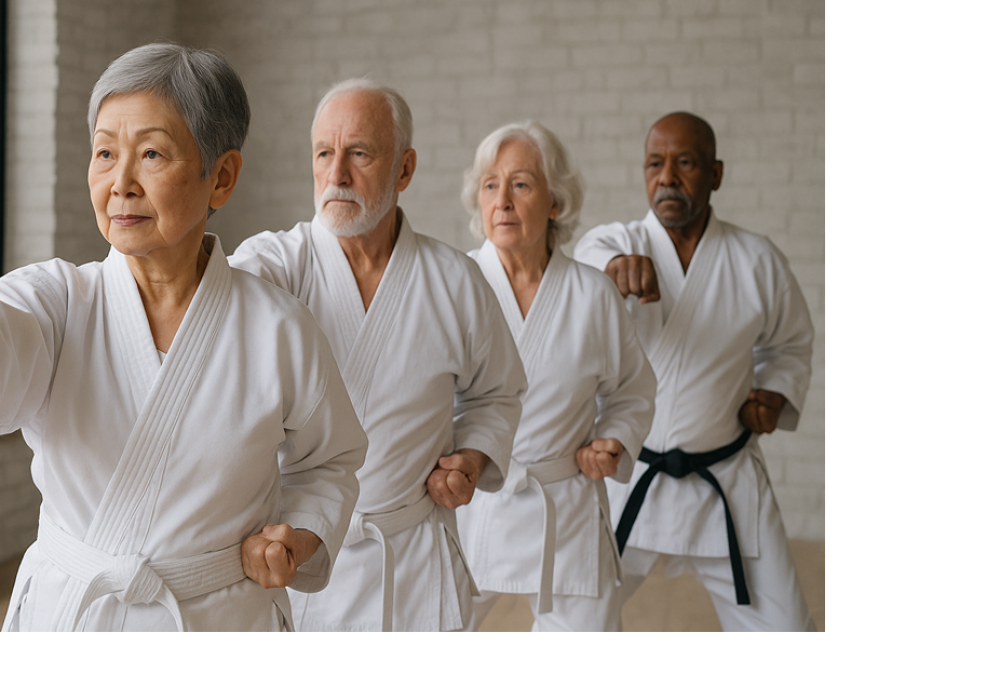
Martial Arts for Seniors: Why It Surpasses Walking for Healthy Aging
Walking is wonderful. But if your goals include preventing falls, sharpening cognition, improving confidence, and building whole-body strength without pounding your joints, certain martial arts often deliver more than a daily stroll. Evidence from Harvard Health Publishing and multiple randomized trials shows that practices like tai chi and qigong meaningfully reduce fall risk, improve balance and executive function, and ease pain—benefits that typically exceed what you’d expect from walking alone. Harvard Health+2Harvard Health+2 Whether aging in place, or choosing a senior community, assisted living, independent living or memory care, what you need to know about martial arts and how to get started. DISCLAIMER: This is not medical advice but is form information and educational purposes. Always consult with your Dr. or healthcare professional before making any changes to your diet, or exercise routine.
Why martial arts can outpace walking for healthy aging
-
Balance & fall prevention: Tai chi is consistently ranked among the best exercises for balance. Meta-analyses of randomized controlled trials show tai chi reduces falls and improves balance in older adults; benefits grow with training time and frequency. Harvard Health specifically highlights tai chi’s balance gains and fracture-risk reduction via better stability. PubMed+1
-
Cognition & mood: Mind–body martial arts (tai chi, qigong) improve executive function, attention, and processing speed in older adults, with effects beyond physical fitness alone. Harvard Health summarized a 20-study meta-analysis showing tai chi enhances executive function; a 2023 meta-regression confirms cognitive benefits even after adjusting for physical improvements. Harvard Health+1
-
Strength, mobility, and joints: Slow, controlled, weight-bearing sequences build lower-body and core strength while remaining gentle on cartilage and tendons. Harvard notes tai chi’s weight shifting can even help bone density and joint stability. Harvard Health
-
Confidence in daily movement: Judo-inspired ukemi (safe-fall techniques) training teaches how to protect hips and head if you do fall—something walking doesn’t address. Studies show older adults can learn these skills, reducing hip impact forces and potentially lowering injury severity. PubMed+1
Senior-friendly martial arts (and how they help)
1) Tai Chi (Taiji)
What it is: A slow, flowing sequence of postures performed with mindful breathing.
Top benefits: Strong evidence for balance, fall reduction, mobility, pain relief, and cognition. Harvard Health calls tai chi one of the best exercises for balance and documents broad benefits for older adults. Harvard Health+1
Research highlights: 2023 meta-analysis (24 RCTs) found tai chi effectively reduces fall risk and improves balance; effects increase with more frequent, longer practice. A 2024 study also found tai chi reduces fear of falling, an important driver of inactivity. PubMed+1
Great for: Anyone wanting a gentle, joint-friendly, full-body practice with strong science behind it.
2) Qigong
What it is: A related mind–body practice emphasizing coordinated breath, posture, and slow movements.
Top benefits: Overlaps with tai chi—improved balance, mobility, and cognitive function; can be easier to learn for total beginners. BioMed Central
Great for: Those who prefer simple, repeatable routines or need seated/standing adaptations.
3) Aikido (Beginner/Adapted)
What it is: A Japanese art focused on redirecting force, body awareness, and partner sensitivity rather than striking.
Top benefits: Posture, joint mobility, coordination, and confidence with partner movement. Many dojos offer gentle foundations without throws. (Media summaries often cite Harvard experts favoring aikido for older adults alongside tai chi because of its emphasis on balance and mindful movement.) Tom's Guide
Great for: Social learners who enjoy partner practice and want to improve reactive balance and calm under pressure.
4) Wing Chun (Ving Tsun)
What it is: A Southern Chinese art emphasizing relaxed, upright posture, short-range hand techniques, and minimal high kicks.
Top benefits: Trains stance, alignment, and upper-body coordination; small studies show better handgrip strength and standing balance in older practitioners versus peers. PMC
Great for: People seeking practical, low-impact movement patterns and posture training.
5) Judo-based Ukemi (Safe-fall Training)
What it is: Learning how to land safely—rolling, dissipating impact, protecting the hip and head.
Top benefits: Evidence shows older adults can learn ukemi; studies demonstrate reduced hip impact forces during sideways falls and feasibility in at-risk older adults. It’s a unique complement to walking or tai chi. PubMed+1
Great for: Anyone worried about falls, osteoporosis, or icy sidewalks.
What about “harder” arts like karate or taekwondo?
Small studies and reviews suggest benefits for strength, flexibility, balance, and even cognition in older adults when training is adapted (emphasizing forms/kata, low kicks, and no sparring). Kickboxing-style group programs have shown muscle and bone health gains in community-dwelling older adults—again, scaled appropriately. PMC+1
How to get started (safely and confidently)
-
Check with your clinician if you have balance issues, osteoporosis, cardiovascular disease, or joint replacements. Bring up tai chi/qigong’s proven fall-prevention and cognitive benefits—it’s helpful context. PubMed+1
-
Pick the right entry point.
-
Tai chi or qigong: Look for “Beginner,” “Yang 24,” or “Tai Chi for Arthritis/Fall Prevention.”
-
Aikido/Wing Chun: Ask about intro or senior-friendly sessions with no high falls or sparring.
-
Ukemi: Seek classes explicitly labeled safe-fall training for older adults.
-
-
Vet the instructor/dojo: Ask about experience with older adults, class size, flooring (for ukemi), and progressions.
-
Start 2–3x/week for 20–60 minutes. Meta-analyses suggest benefits scale with frequency and duration. Many people feel better balance within 8–12 weeks. PubMed
-
Modify intelligently:
-
Stances a bit higher; keep steps short and controlled.
-
Use a chair, barre, or wall for support during early balance work.
-
Skip jumping, deep twisting, or joint locks that stress the hands/shoulders.
-
-
Add strength + walking: Resistance training is still excellent for global cognition and bone; combine light strength twice weekly with your martial-arts sessions and keep walking for steps and social time. PMC
A simple beginner plan (first 8–12 weeks)
-
Weeks 1–2: Two 30-minute tai chi or qigong classes + one 15-minute home practice (guided video).
-
Weeks 3–6: Three sessions/week (add a short balance drill set: weight shifts, single-leg stands holding a counter).
-
Weeks 7–12: Consider adding 1 short ukemi session (on thick mats with instruction) or an introductory aikido/wing chun class focused on posture and stepping.
-
Always: Maintain a comfortable pace; monitor for pain or dizziness; celebrate small wins (standing from a chair more easily, steadier stairs).
Walking vs. martial arts: do both—just expect different returns
Walking shines for cardiovascular health, mood, and daily steps. But if your priority is fall prevention, reactive balance, confident movement, and cognitive sharpening, the evidence base for tai chi/qigong (and adapted martial arts skills like ukemi) is stronger than for walking alone. Harvard Health underscores tai chi’s balance superiority, and multiple meta-analyses back sustained improvements in fall rates and cognitive function. The smartest aging plan pairs daily walking with 2–3 weekly martial-arts sessions. Harvard Health+2PubMed+2
Learn more (Harvard and peer-reviewed sources)
-
Harvard Health Publishing: Best exercise for balance: Tai chi; Health benefits of tai chi; Improve your balance with tai chi; A sharper mind: tai chi can improve cognitive function. Harvard Health+3Harvard Health+3Harvard Health+3
-
Systematic reviews & trials: Tai chi for fall prevention/balance (2023–2024); tai chi/qigong meta-regression on cognition (2023); tai chi for fear of falling (2024). Frontiers+3PubMed+3PMC+3
-
Safe-fall/ukemi research in older adults (pilot and feasibility studies). PubMed+1
-
Additional senior-adapted martial arts evidence (kickboxing, Wing Chun). PMC+1
Practical starter resources
-
Harvard Health—Tai Chi (overview + how to begin). Harvard Health
-
Frontiers in Medicine (2024)—Tai chi reduces fear of falling (open access). Frontiers
-
PubMed (2023)—Tai chi reduces falls and improves balance (meta-analysis). PubMed
-
BMC Geriatrics (2023)—Tai chi/qigong improve cognitive and physical function (meta-regression). BioMed Central
-
PMC (2021)—Judo-based ukemi feasibility in older adults. PMC