

Key Takeaways
- Four weeks out: paperwork, the doctor's forms and the TB test, and a call to the pharmacy. These have lead times and hold up move-in day.
- Two weeks out: measure the apartment and plan the layout around the bed, the chair and the path to the bathroom. Less furniture, not more.
- Pack the familiar, not the valuable: the quilt, the photos, the lamp from the bedside. Label every item, and leave jewellery and cash at home.
- Move in the morning, on a weekday, and plan to stay through the first meal. Then leave. The first week belongs to the staff and your parent.
- Expect a wobble around day ten. It is normal, it passes, and the phone call that says "I want to come home" is not a decision.
The agreement is signed and the move-in date is set. What comes next is thirty days of logistics that nobody warns you about: forms with lead times, a pharmacy that has to be told, a lifetime of belongings and a one-bedroom apartment. This is the list, week by week, so the move happens on a calm morning instead of a frantic one. Print it and cross things off.
Four weeks out: paperwork and the doctor
Everything in this week has a waiting period. Start here, whatever the date.
- Physician's report. Every state requires a doctor's form before move-in, covering diagnoses, medications and a statement that your parent is appropriate for assisted living. Book the appointment now; the community will give you the form.
- TB test or chest X-ray. Required almost everywhere, and a skin test needs two visits 48 to 72 hours apart.
- Medication list. Ask the doctor for a current, signed list including over-the-counter items. The community cannot give anything that is not on it.
- Pharmacy. Most communities use a partner pharmacy that delivers blister packs. Sign the transfer forms and ask when the first delivery lands. Fill any prescriptions running low now so nothing lapses in the gap.
- Legal documents. The community will want copies of the power of attorney, health care proxy, advance directive and any DNR. If they do not exist, this is the month to see an attorney.
- Insurance. Medicare, supplement and drug plan cards, plus long-term care insurance details if a claim will be made.
- Money. Set up how rent will be paid, ideally automatic from the account that receives Social Security, and confirm who receives the statements.
Three weeks out: the apartment and the plan
- Measure. Get the apartment's floor plan with dimensions, or measure it yourself, including door widths and where the outlets and call cords are.
- Plan the layout around three things: the bed, the chair your parent actually sits in, and a clear straight path to the bathroom with nothing to trip on. Everything else is optional.
- Choose the furniture. A bed low enough to sit on with feet flat, a firm chair with arms, a bedside table, a dresser, a small table and two chairs. Skip the sofa, the coffee table and anything with a glass top. A recliner that lifts is worth the money.
- Ask what the community provides. Many include a bed frame, window coverings and a call pendant. Some allow wall mounting a television; some do not.
- Book the movers for a weekday morning. Ask the community about elevator reservations and loading dock hours.
- Tell the people who need to know: the bank, the post office (forward the mail), the newspaper, the church, the hairdresser, and the neighbours who check in.
Two weeks out: sort, pack, label
The hardest week emotionally. Do it with your parent, not for them, in short sessions.
Take
- The bedding they sleep under now, washed and familiar.
- Ten to fourteen days of clothing, chosen for ease: elastic waists, front closures, non-slip shoes. Communities do laundry weekly.
- Framed photos, a favourite lamp, a clock they can read, a few books, the radio or the tablet with the family's numbers loaded.
- Toiletries in the brands they know, a shower chair if the community does not supply one, glasses and hearing aids with spare batteries.
- One or two pieces of art or a small shelf of ornaments. Enough to say "this is mine", not enough to dust.
Leave
- Jewellery of value, cash beyond a few dollars, and anything irreplaceable. Communities are safe places, but they are also busy ones.
- Throw rugs, extension cords, space heaters, candles and anything that is a fall or fire risk. Most are prohibited anyway.
- The full kitchen. A kettle, two mugs, a few plates and a small fridge is plenty.
- Furniture that has to be squeezed in. If it does not fit the plan, it does not go.
Label everything with your parent's name, including clothing, glasses, hearing aid cases and the television remote. The community's laundry will thank you.
One week out: confirmations
- Call the community and confirm the date, the arrival time, the apartment number and who will meet you.
- Confirm the pharmacy's first delivery is scheduled for move-in day or before.
- Confirm the movers, and the elevator.
- Deliver the paperwork in person and get a receipt or a checklist showing nothing is missing.
- Ask the community for the dining schedule, the activity calendar and the name of your parent's primary aide on day one.
- Set up the apartment before move-in if the community allows it, so your parent walks into a made bed and a lamp that is already on. This single step changes the first night.
Move-in day
- Go in the morning, after breakfast, on a weekday when the full staff is on.
- Bring your parent after the furniture is placed, not during. Nobody should watch their bed being carried in.
- Meet the aide, the nurse and the dining staff by name. Introduce your parent as a person: what they did, what they like, what they hate.
- Hand over medications in their original containers to the nurse, and get a signed receipt.
- Walk the route to the dining room and the activity room together, twice.
- Stay through the first meal. Then leave. Staying for dinner and the evening delays the moment your parent starts to rely on the staff, and that moment is the point of the move.
The first week
Call daily; visit every other day at most, unless your parent has dementia, in which case follow the memory care staff's advice, which is often to give it a few days. Ask the staff how meals, sleep and medications are going rather than asking your parent, who will say "fine" or "terrible" depending on the hour.
Book the follow-up visit with the doctor for two to three weeks in, and tell the community's nurse the date. Check that the mail is arriving. Bring one thing from home each visit that was forgotten. And take a photograph of the apartment on day three; it will look like home sooner than you think.
Day ten, roughly
Almost every family gets a call around the second week: "I want to go home." It is not a decision; it is the moment the novelty wears off and the loss lands. The response that works is to listen, to acknowledge that it is hard, and to say you will talk again in a few days. Most residents settle between weeks three and six. If by week eight your parent is still miserable, isolated or losing weight, that is when to sit down with the community's director, not before.
Before the move: the choice itself
If you are reading this before the agreement is signed, our guide to reading the contract covers the pages that matter, and the community search shows starting prices and care types before you ever tour.

How to Read an Assisted Living Contract: Fees, Rate Increases and Exit Terms
The clauses that matter in a residency agreement, what they usually say, and what to ask for before you sign.

Questions to Ask a Memory Care Community: The Printable Checklist
Forty questions for a memory care tour, grouped by what matters most, with the answers to hope for. Print it and take it with you.

12 Signs It May Be Time for Assisted Living (That Families Often Miss)
The quiet signs a parent needs more help than home can give, and what to do once you have seen them.
The New Seniors Places: What Changed for Families
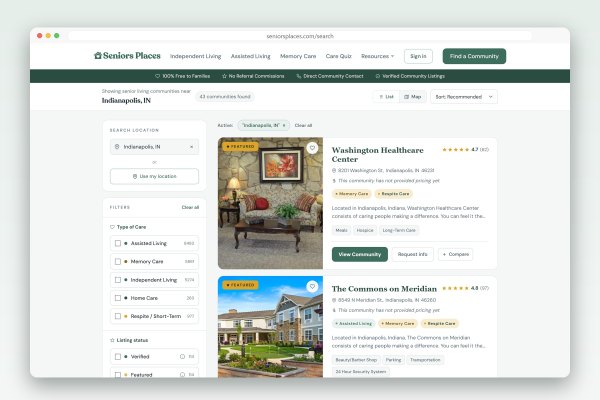
Seniors Places has been rebuilt around the family doing the searching: a budget filter, side-by-side comparison, a care quiz with no sales call, community pages that answer the tour questions, and inquiries that go to the community you chose. Free, with no referral fees.