
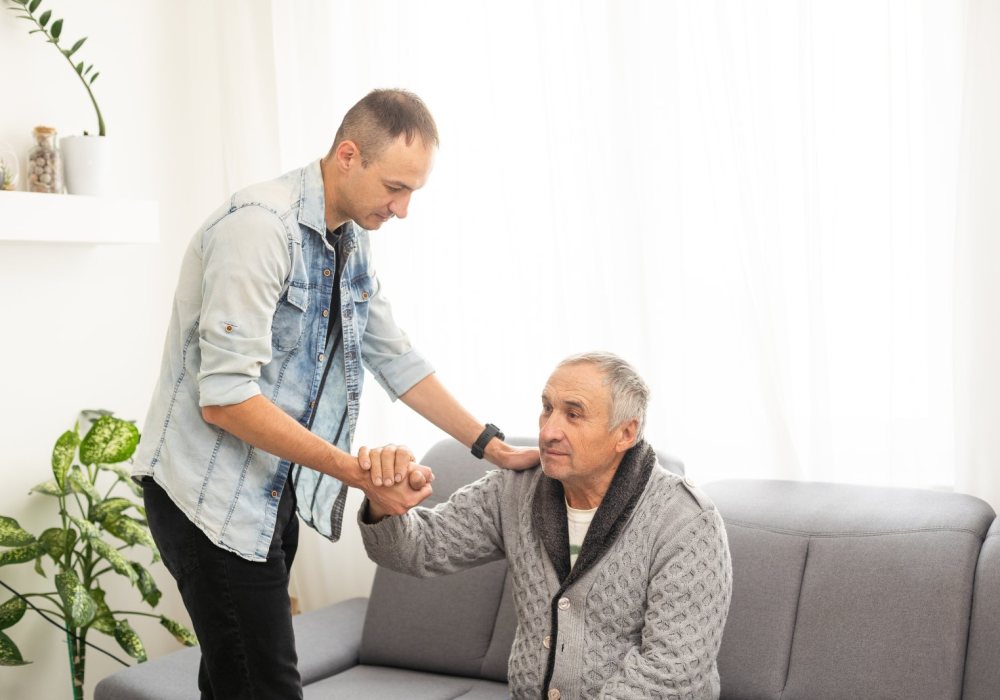
Key Takeaways
- The clearest signs are physical and easy to check on a visit: the fridge, the pill organizer, the mail pile, the bathroom, the car.
- One fall changes everything. Half of people who fall once will fall again within a year, and the second one is usually worse.
- Loneliness is a medical risk, not a mood. Days without a real conversation are as strong a signal as any missed medication.
- A tired caregiver spouse is a sign too. Two people at home in decline together is the situation assisted living was built for.
- Seeing three or more of these does not mean move this month. It means start looking now, while your parent can still be part of the choice.
Nobody wants to be the child who moved Mom out of her house too soon. So families wait for a clear signal, and the signal usually arrives as a fall, a hospital stay or a phone call from a neighbour. By then the choice is made under pressure, in a week, from whatever has a bed. This is the list of what to look for before that call, so you can make the decision on your terms and hers.
A note on how to use it: one of these signs is a conversation. Three or more together is a plan. None of them means your parent has to move this month. They mean it is time to start touring while she can still walk the halls and tell you what she thinks.
1. The fridge tells a different story than your parent does
Ask how she is eating and you will hear "fine". Open the fridge and look at dates, at what is spoiled, and at what is missing. Cooking for one is work, and when it becomes too much work, meals shrink to toast, cereal and tea. Unplanned weight loss in an older adult, ten pounds in a few months without trying, is one of the strongest predictors of a hospital stay in the following year.
2. Medications are not being taken the way they were prescribed
Count the pills. If the organizer for Tuesday is still full on Thursday, or the bottle that should be half empty is nearly full, medications are being missed. Missed blood pressure or heart medication is behind a large share of the hospital admissions that lead straight to assisted living. Communities handle medications for a reason: it is the single hardest thing to manage from a distance.
3. There has been a fall, even a "small" one
Falls get minimized. "I just slipped." Look for bruises on forearms, a new reluctance to shower, furniture being used as handrails. Roughly one in four adults over 65 falls each year, and half of those who fall once will fall again within twelve months. The first fall is the warning. The second is often a hip.
4. Bathing has become occasional
A skipped shower is rarely about hygiene. It is about fear. Stepping over a tub edge on a wet surface is the most dangerous thing many older adults do all day, and they know it. Unwashed hair, the same clothes on each visit, a faint smell: these are signs of a bathroom that has become a hazard, not a lapse in standards.
5. The mail is piling up, or the bills are being paid twice
A stack of unopened mail, a utility shut-off notice, a chequebook with duplicate entries, or a sudden generosity toward phone callers and charities. Managing money requires working memory and judgment, and it is often the first thing to slip. Financial exploitation of older adults is common precisely because scammers spot this before families do.
6. Driving has new dents in it
Walk around the car. Scrapes on the bumpers, a mirror held on with tape, a story about a parking lot that does not quite add up. Getting lost on a familiar route is a red flag for cognitive change. Giving up driving is one of the hardest conversations, and one reason assisted living is easier than it sounds: the shuttle removes the argument.
7. The house is being maintained less, or not at all
Clutter where there used to be order, laundry in piles, dishes in the sink for days, a burnt pan, a bathroom that is not clean. Housekeeping is physical work, and when it stops it usually means bending, lifting and standing have become hard. Watch too for the opposite: a spotless house kept by a spouse who is exhausted from doing it all.
8. She has stopped doing the things she loved
The bridge club, church, the garden, the weekly call with a friend. When the calendar empties, it is often because getting there has become too difficult, or because she does not trust herself in company any more. Isolation is not just sad. Prolonged loneliness in older adults raises the risk of dementia, heart disease and early death, and it is the one thing a community fixes on the first day.
9. The same story, twice in one visit
Everyone forgets a name. What families notice, and then explain away, is repetition: the same question ten minutes apart, the same story at lunch and again at dinner, confusion about what day it is. Memory changes do not always mean dementia, but they always mean the home safety net has holes in it. A doctor's visit is the first step; a look at memory care may be the second.
10. The caregiver is wearing out
If your other parent, or a sibling, is doing the lifting, the driving, the medications and the nights, look at them too. Caregiver burnout is real, measurable and dangerous for both people. When the caregiver ends up in hospital, the person they were caring for has nowhere to go. Two people at home in decline together is exactly the situation assisted living was designed for. We wrote about the signs of caregiver burnout earlier this year.
11. Small emergencies are becoming routine
A stove left on. A door left unlocked overnight. A cut that did not get cleaned. A night on the floor because she could not get up and the phone was in the other room. Each one gets a plausible explanation. Together they describe a home where the margin for error has gone.
12. You are worrying about her every day
This one is about you. If you check in every morning to make sure she answered, if your phone lighting up with her number makes your stomach drop, if you have rearranged your work around her, that is information. Families often move a parent into assisted living for the parent's safety and discover, a month later, that they got their own life back too.
What to do once you have seen the signs
Three steps, in order.
- Get a medical assessment. A geriatrician or your parent's doctor can separate a treatable problem, such as a thyroid issue, a medication interaction or depression, from a lasting change in ability. Some "signs of decline" reverse with the right treatment.
- Have the conversation early and more than once. The goal of the first talk is not agreement; it is to start. Our upcoming guide on how to talk to a parent about moving covers the words that work and the ones that shut the door.
- Tour while it is still a choice. Visit two or three communities together, at lunchtime, when the dining room is full. A parent who has seen a place, eaten the food and met a resident is a different person in the decision than one who is told about it from a hospital bed.
Not sure which level of care fits? The care quiz asks the questions a placement advisor would and points you to the right kind of community. And when you contact a community through Seniors Places, it pays nothing, so the conversation is about your parent and not a referral fee.

Veterans Benefits for Senior Living: Aid & Attendance Explained
How the VA's Aid and Attendance pension can pay a large share of assisted living, who qualifies, and how to apply without the usual delays.

Questions to Ask a Memory Care Community: The Printable Checklist
Forty questions for a memory care tour, grouped by what matters most, with the answers to hope for. Print it and take it with you.
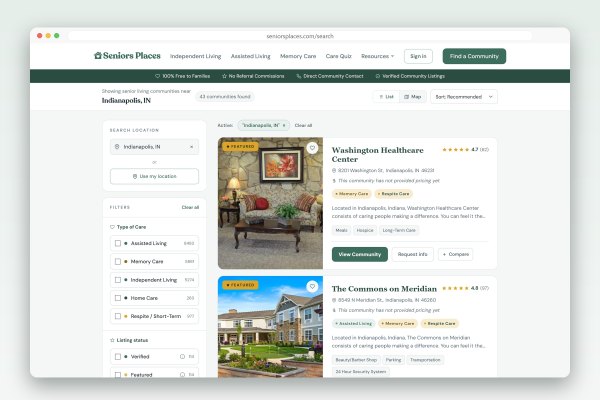
The New Seniors Places: What Changed for Families
Seniors Places has been rebuilt around the family doing the searching: a budget filter, side-by-side comparison, a care quiz with no sales call, community pages that answer the tour questions, and inquiries that go to the community you chose. Free, with no referral fees.

Does Medicaid Pay for Assisted Living? What Each State Waiver Covers
How Medicaid waivers pay for assisted living care, who qualifies, what your state calls it, and how to find a community that takes it.