

Key Takeaways
- Medicare never pays for assisted living. Medicaid can, in most states, through a home and community based services waiver, but it covers care, not room and board.
- Waivers have limited slots and waiting lists that run from weeks to years, so apply before the money runs out, not after.
- Eligibility has two tests: income and assets below your state's limit, and a level of care that would otherwise qualify for a nursing home.
- Only some communities accept the waiver and many cap how many waiver residents they take. Ask on the first call, and ask whether a private-pay resident can convert later.
- An elder law attorney or your Area Agency on Aging can walk you through the application for free or a modest fee, and it is worth it.
Here is the sentence that surprises most families: Medicare does not pay for assisted living, and never has. Medicaid, the program for people with limited income and assets, can, but only through a side door called a waiver, only for the care part of the bill, and only at communities that agree to take it. This guide explains how that door works and what it is called in your state.
Medicare and Medicaid are not the same program
Medicare is health insurance for people 65 and over. It pays for hospital stays, doctors, and up to 100 days of skilled nursing after a hospital stay. It does not pay for help with bathing, dressing and meals, which is what assisted living is. A community that tells you Medicare will cover the stay is wrong.
Medicaid is a joint federal and state program for people with low income and few assets. In every state it pays for nursing home care for those who qualify. In most states it also pays, through a waiver, for the same kind of care delivered somewhere cheaper than a nursing home: at home, in adult day care, or in assisted living.
What a waiver actually covers
The waiver pays the community for personal care, medication management, nursing oversight and supervision. It does not pay the rent, the meals or the utilities. States call that part room and board, and it is the resident's responsibility, usually paid from Social Security.
To make that work, states cap what a community may charge a waiver resident for room and board, often at or near the federal SSI benefit, and the resident keeps a small personal needs allowance. Some states add a supplement on top. The practical effect: a waiver resident lives in a studio or a shared companion suite, and the community earns less on that apartment than on a private-pay one. That is why communities limit how many waiver residents they accept.
Who qualifies
There are two tests, and you have to pass both.
Financial
In most states a single applicant in 2026 can have income up to about $2,900 a month and countable assets of $2,000. A home, one car, personal belongings and a prepaid funeral are usually not counted. Income over the limit does not always disqualify: many states allow a Miller trust, also called a qualified income trust, that routes the excess to the state. Married couples have separate, more generous rules that protect the spouse still living at home.
Medicaid also looks back five years at gifts and transfers. Giving the house to a child last year does not make it disappear; it creates a penalty period. This is the single biggest reason to get advice before you apply.
Medical
The applicant must need a nursing home level of care, which each state defines its own way. Typically that means needing hands-on help with two or three activities of daily living, or supervision because of dementia. A state nurse or case manager does the assessment.
What your state calls it
Every state names its program differently, and a few states have no assisted living waiver at all. The table gives the common name in 2026 so you know what to ask for. Programs change; confirm with your state Medicaid office or Area Agency on Aging before you rely on any of it.
| State | Program that can pay for assisted living care |
|---|---|
| Arizona | ALTCS (Arizona Long Term Care System) |
| California | Assisted Living Waiver (limited counties, long waiting list) |
| Colorado | Elderly, Blind and Disabled (EBD) Waiver |
| Florida | Statewide Medicaid Managed Care Long-Term Care (SMMC LTC) |
| Georgia | CCSP and SOURCE |
| Illinois | Supportive Living Program (SLP) |
| Indiana | PathWays for Aging (replaced the Aged & Disabled Waiver for people 60+) |
| Maryland | Community Options Waiver |
| Michigan | MI Choice Waiver |
| Minnesota | Elderly Waiver (EW) |
| Missouri | Aged and Disabled Waiver (limited; many communities use the state's supplemental program instead) |
| New Jersey | Managed Long Term Services and Supports (MLTSS) |
| New York | Assisted Living Program (ALP) |
| North Carolina | State/County Special Assistance plus Medicaid personal care (no waiver as such) |
| Ohio | Assisted Living Waiver |
| Pennsylvania | Community HealthChoices (personal care homes are generally not covered) |
| Texas | STAR+PLUS |
| Virginia | Commonwealth Coordinated Care Plus (CCC Plus) plus the Auxiliary Grant |
| Washington | COPES |
| Wisconsin | Family Care and IRIS |
If your state is not listed, it almost certainly has a program, just under a name we did not have room for. Search your state name plus "HCBS waiver assisted living", or call your Area Agency on Aging, which exists in every county precisely to answer this.
The waiting list problem
Waivers are not an entitlement. Each state funds a set number of slots, and when they are full, eligible people wait. In some states the wait is a few weeks. In others it is measured in years. Two things follow from that.
First, apply early. Families often wait until savings are nearly gone, then discover an 18-month list. If your parent's money will last two years at private-pay rates, the application should go in now.
Second, ask every community whether it accepts the waiver and whether it lets a private-pay resident convert to it later. A community that says yes to both is protecting your parent from a second move when the savings run out. A community that says no to the second question is telling you, politely, that the stay ends when the money does.
How to find a community that takes it
Communities do not always advertise it. When you call, ask three questions in this order:
- Do you accept the state's Medicaid waiver for assisted living?
- How many waiver residents do you have now, and is there a cap?
- If my parent moves in private-pay and later qualifies, can they stay on the waiver in the same apartment?
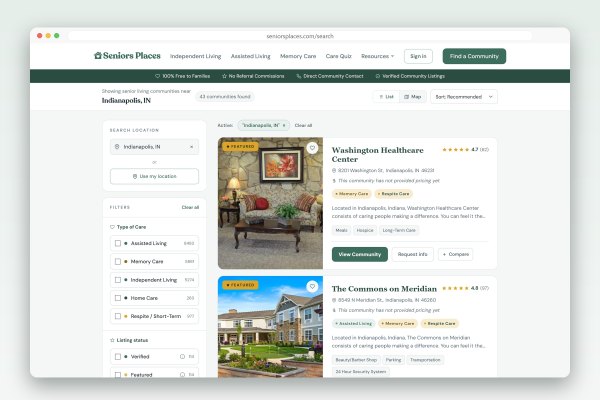
On Seniors Places, the listing's care types include Accepts Medicaid where a community has told us so, and every inquiry goes straight to the community with no referral fee attached, so there is no one in the middle with an interest in steering you toward the private-pay building.
Getting help with the application
The application is long, the documentation is exacting, and a mistake can cost months. Three sources of help:
- Your Area Agency on Aging. Free counselling and often help completing the application.
- The community itself. Communities that take the waiver have done hundreds of these and will usually help.
- An elder law attorney. Worth the fee if there is a house, a spouse at home, or any gifts in the last five years. They can protect assets legally that a do-it-yourself application would lose.
Other ways to close the gap
If your parent is over the asset limit but cannot afford $6,000 a month for long, a few other doors are worth trying before Medicaid: the VA's Aid and Attendance benefit for wartime veterans and surviving spouses, a long-term care insurance policy bought years ago and forgotten, and state non-Medicaid supplements such as Virginia's Auxiliary Grant or North Carolina's Special Assistance. Our cost guide walks through each of them.
Ready to look? Search communities near you and read the care types on each card before you call.

Questions to Ask a Memory Care Community: The Printable Checklist
Forty questions for a memory care tour, grouped by what matters most, with the answers to hope for. Print it and take it with you.

12 Signs It May Be Time for Assisted Living (That Families Often Miss)
The quiet signs a parent needs more help than home can give, and what to do once you have seen them.
The New Seniors Places: What Changed for Families
Seniors Places has been rebuilt around the family doing the searching: a budget filter, side-by-side comparison, a care quiz with no sales call, community pages that answer the tour questions, and inquiries that go to the community you chose. Free, with no referral fees.

The 48 Questions to Ask on a Senior Living Tour
Most first tours end with a folder and a warm feeling. Here are the questions families most wish they had asked, in eight sections, with the free printable checklist to take on every tour.